
Building value across generations - Visiting the Ebbing family in Namdalen
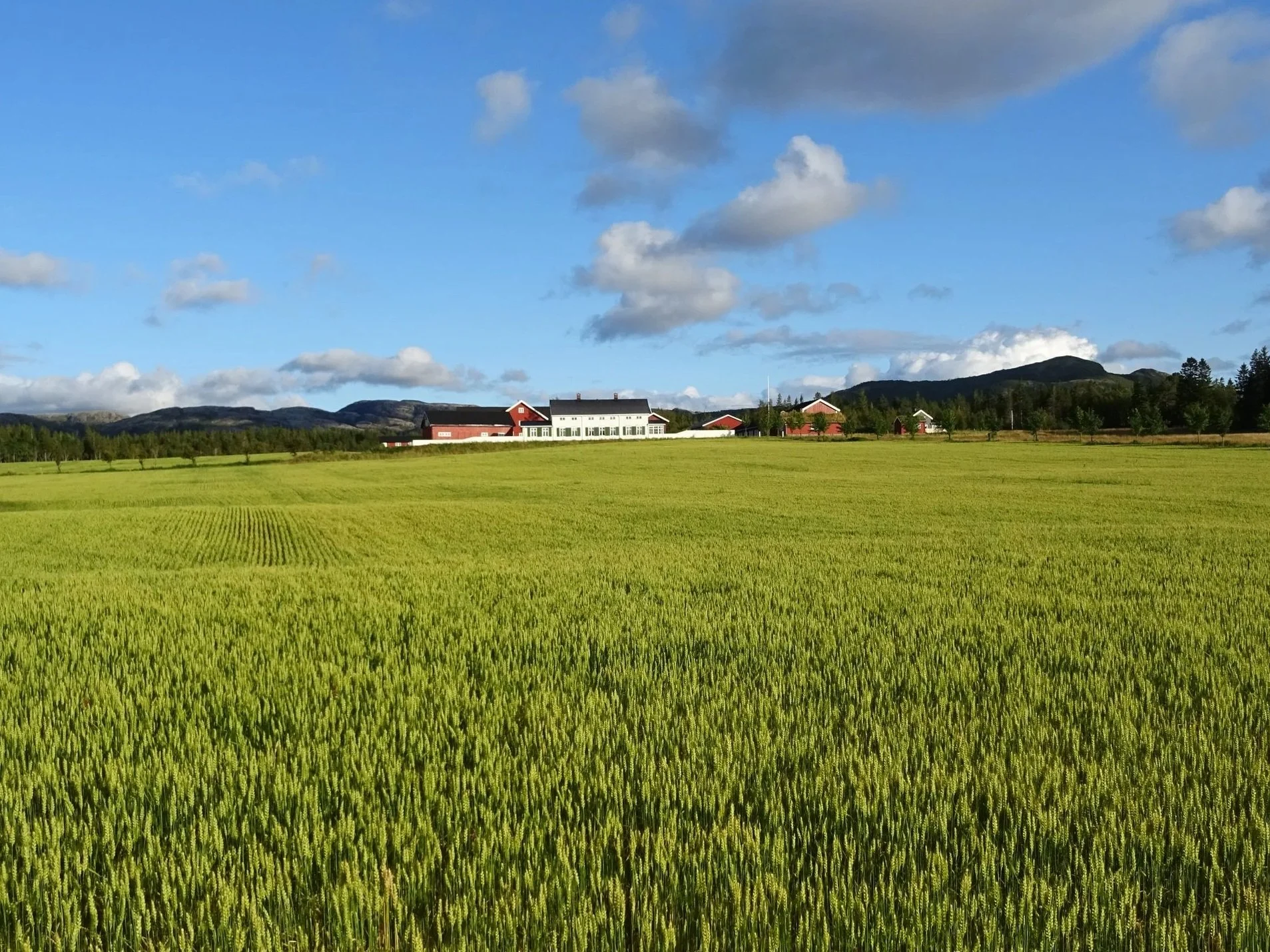
The Firma Albert Collett estate in Namdalen — 59,000 hectares of land and forest managed across four and five generations of the same family
When the forest speaks across generations
I was genuinely happy to be invited to visit Trygve and Henrik in Namdalen. These are two people I have come to know well since I moved to Norway. They are both engaged forest owners and investors in Noora, and I value that relationship more than I can easily put into words. Getting to see them on their own ground - out in Namdalen - made the visit something I won't forget.
A story 150 years in the making
Firma Albert Collett was founded in 1871 by Albert Peter Severin Collett, a young man of just 23 when he first travelled north to Namdalen to manage a struggling timber and sawmill operation on behalf of a Christiania bank. He saw potential where others saw problems, took over the business, and built something that has now endured for more than 150 years - through four and five generations of the same family.
I arrived the first evening and we sat down in the main house as the light fell over the fields and the water beyond. Trygve is a wonderful storyteller, and listening to him trace the arc of Albert Collett's story - the early sawmills, the pulp factory, the fires and restructurings and reinventions - with the Namdalen landscape as a backdrop, was something else entirely. History feels very different when it belongs to the place you are sitting in.
Today, Firma Albert Collett manages around 59,000 hectares of land and forest in Namdalen. What Albert built from timber and necessity has grown into something much broader - and much more resilient.
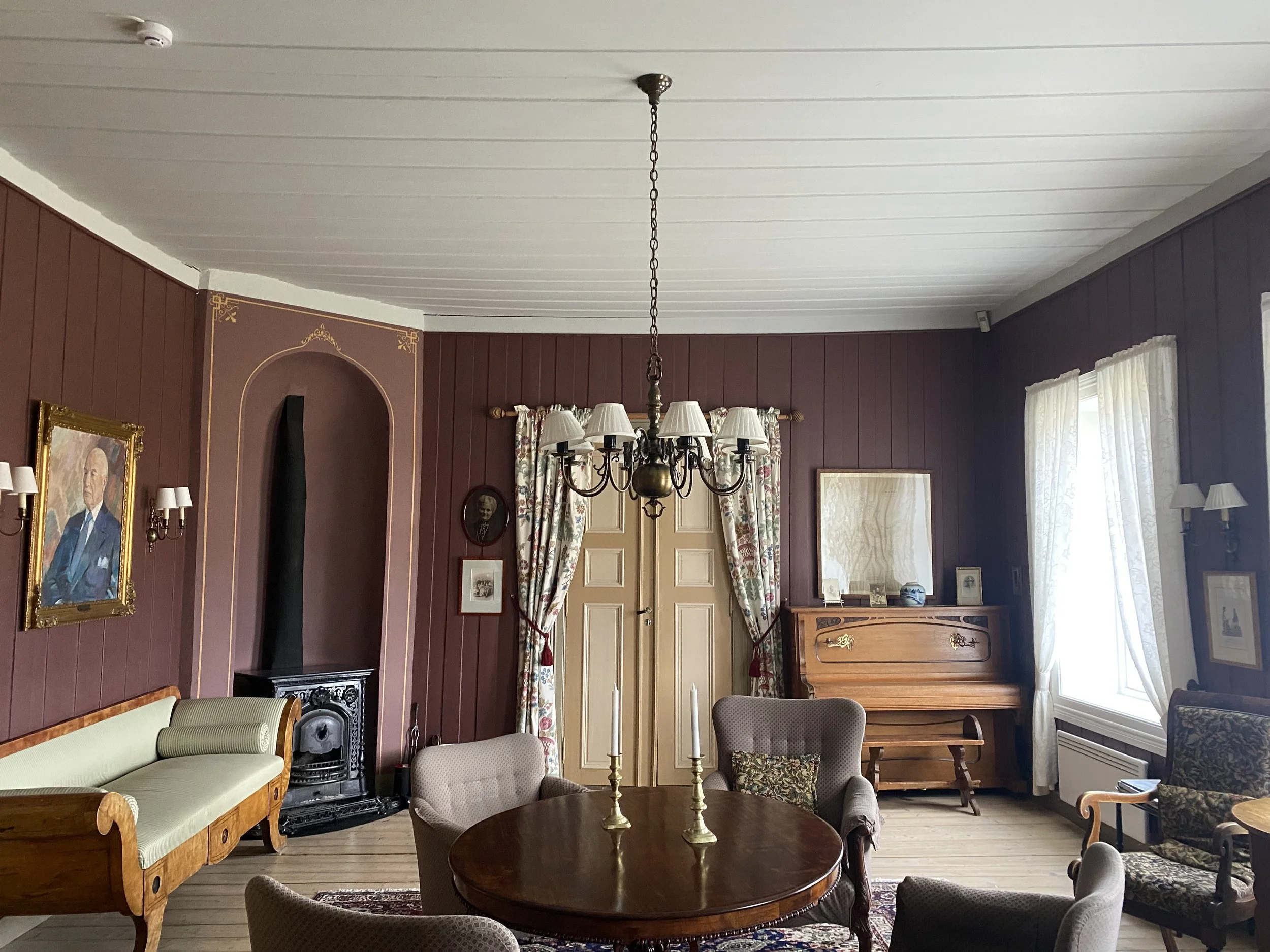
Inside the main house — the portrait on the wall watches over a room that has seen four generations of family decisions.
A portfolio already built for the long term
What strikes you immediately about Firma Albert Collett is that the portfolio thinking is already there. The company operates across hydropower, forestry, agriculture, nature-based tourism, hunting and fishing, and property management. These aren't separate businesses - they are different legs of the same long-term strategy: to build and protect value across generations, not just optimise for any single year's cash flow.
That's the context in which Trygve and Henrik are now examining whether carbon credits could become a new leg to stand on. Not as a replacement for anything, but as a complement - a way to unlock value from the forest that already exists, alongside everything else the estate produces.
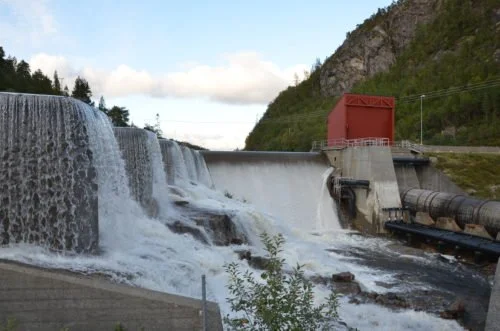
One of the estate's hydropower installations — a key pillar of the diversified portfolio Firma Albert Collett has built over generations.
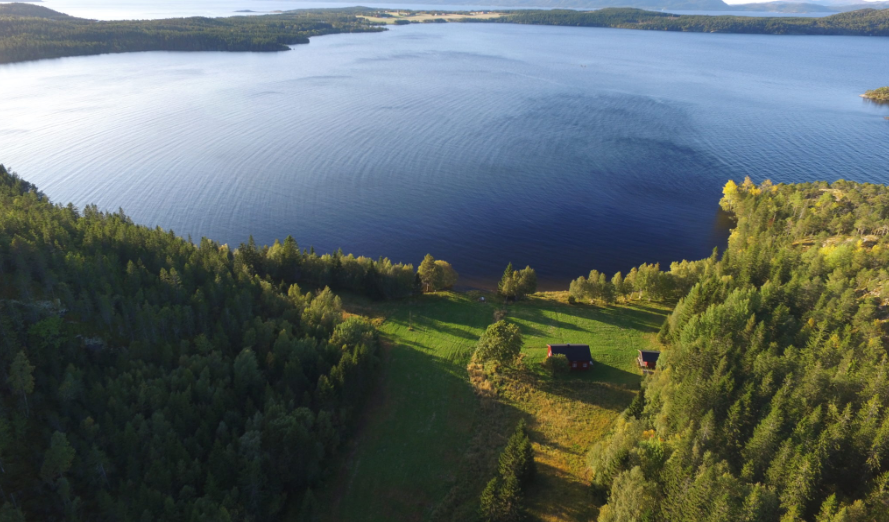
A fishing hut by the water - nature-based tourism, hunting and fishing are part of the same long-term strategy as forestry and hydropower.
Henrik's perspective: the next generation looks at the whole picture
Henrik is increasingly taking ownership of the forest management side of the estate, and it's immediately clear that he approaches it with both fresh eyes and deep roots. One of the questions he has started to ask is how carbon credits fit - not just as a financial instrument, but as part of a coherent forest management plan for the years ahead.
This is an important nuance. Committing stands to a carbon programme means harvest restriction on these areas over time. That's not a problem - it's a trade-off, and like all trade-offs in forest management, it needs to be evaluated carefully against the full 10 to 20 year plan. Which stands make sense? At what point in their rotation? What does it mean for the overall timber portfolio?
But what also came through clearly in our conversations - and this resonates with many of the large forest owners I know, in Norway and Sweden alike - is that for Henrik and Trygve, this isn't primarily about maximising annual income. It's about reinvesting the property, diversifying the forest management portfolio. Carbon credits, assessed correctly, can fit that philosophy very well.
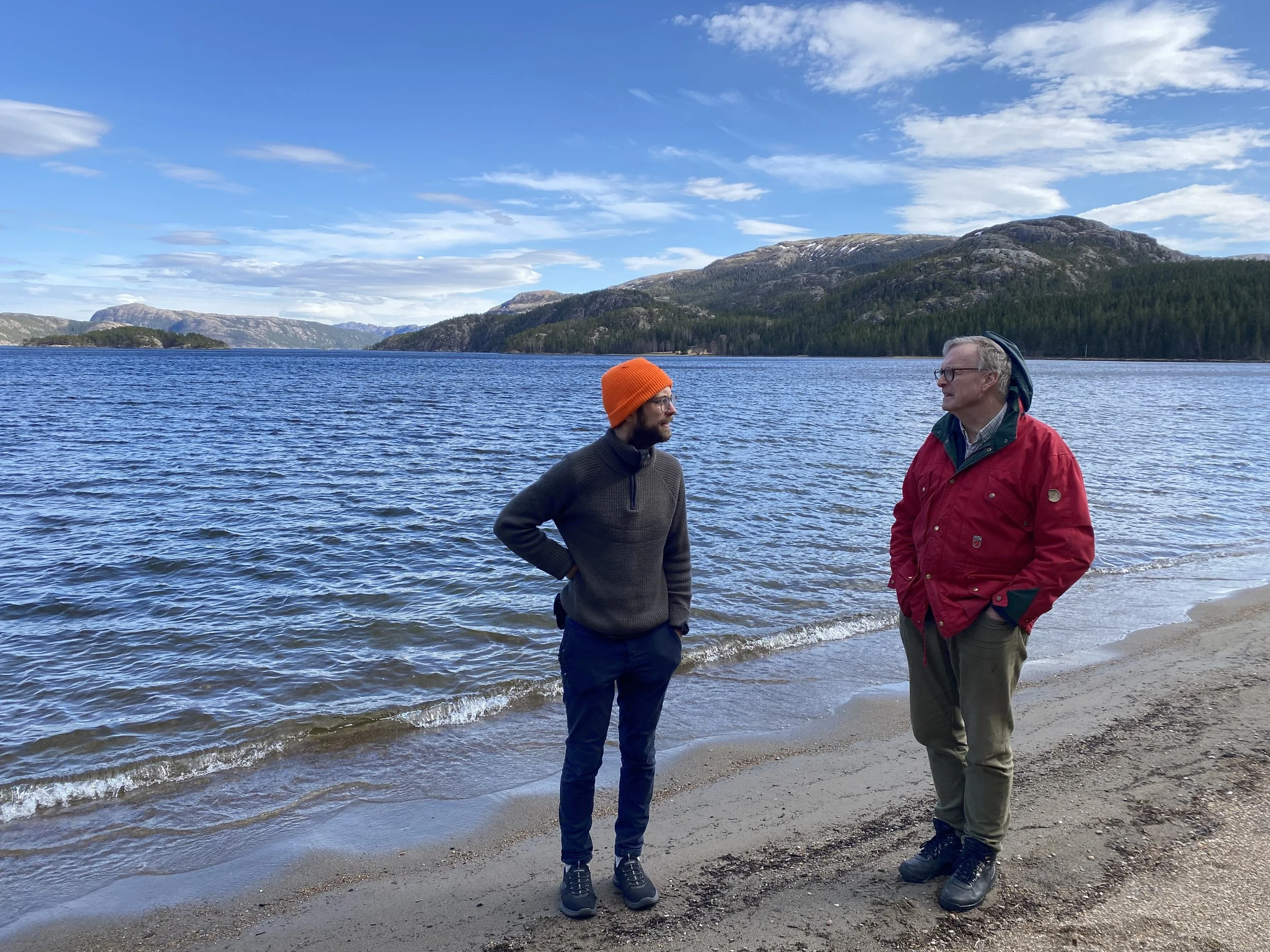
Henrik and Trygve by the lake. The conversation kept returning to the same question: how do you build value that compounds across generations?
Out in the forest
We went out to look at some of the actual stands that the Noora platform had identified as potentially suitable - and that was, for me, the highlight of the visit. There is something about standing in the forest, looking at real trees in a real place, that grounds the whole conversation. Numbers and models are one thing. The forest is another. Seeing the two connect - platform analysis meeting physical reality - is always a good moment.
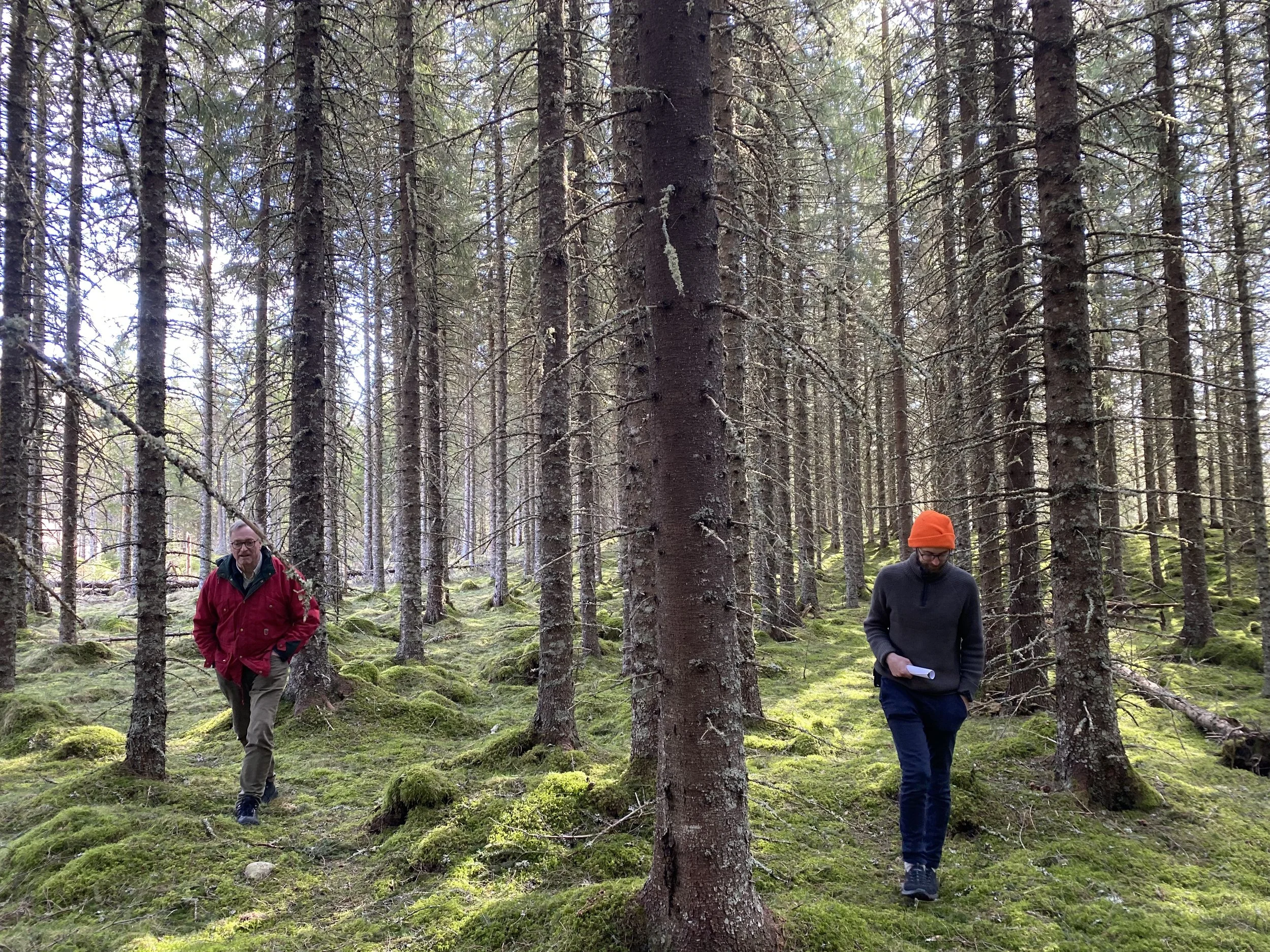
Walking in the forests with Trygve and Henrik — where the Noora-platform analysis meets physical reality.
Why this matters
I feel privileged to have forest owners like Trygve and Henrik as partners in what we are building at Noora.
But beyond that, this visit reminded me of something fundamental about forestry. When you plant a tree, you are making a decision for someone who hasn't been born yet. When you invest in silviculture today, it may be your children - or their children - who see the return.
This is the world Noora was built to serve. And visits like this one remind me why it matters that we get it right.
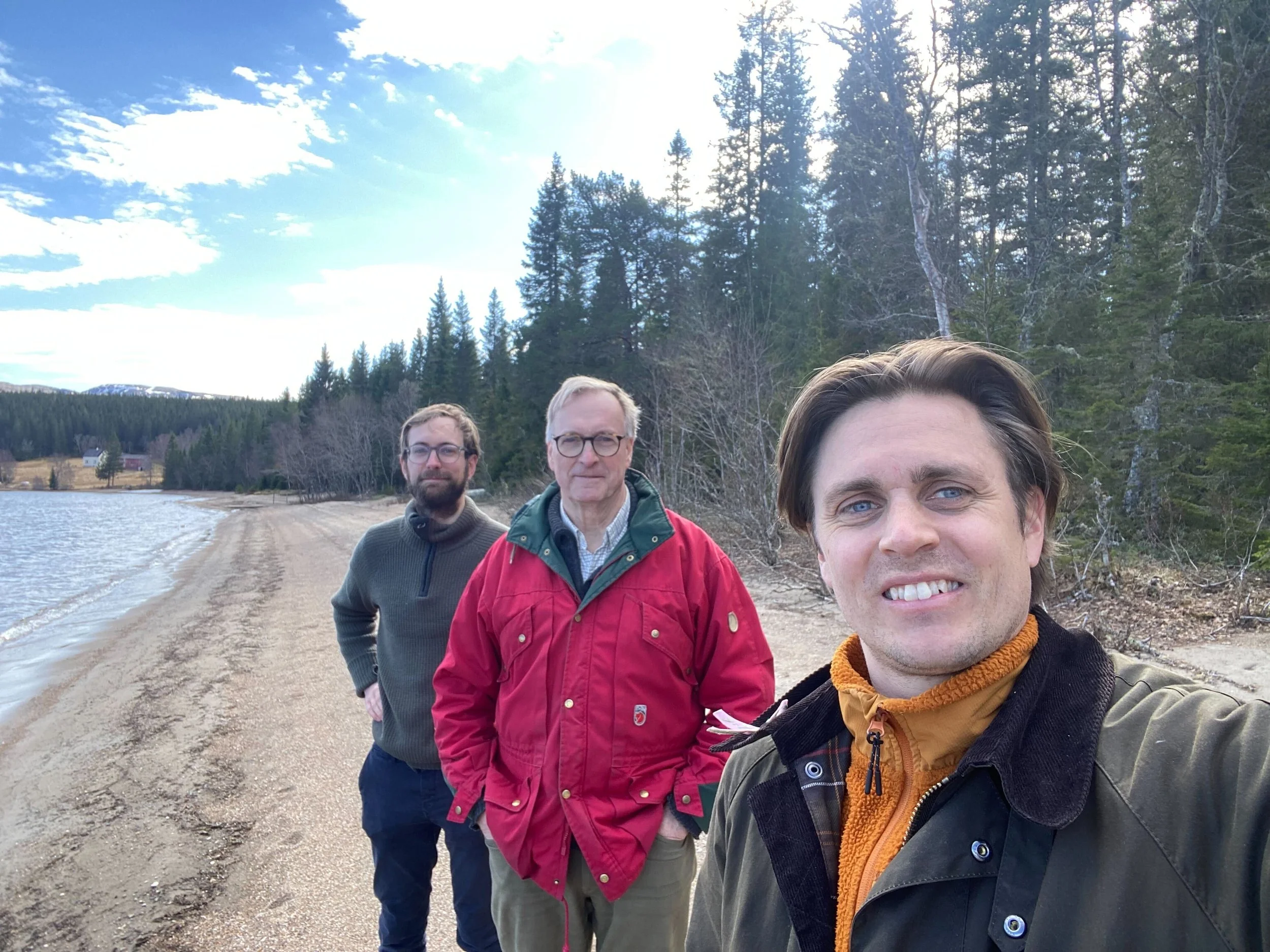
Three people, one forest. From left: Henrik Ebbing, Trygve Ebbing, and the author, on the estate's shoreline in Namdalen.
